On-Site Inspection of a Horizontal Well in the Mountains of Shanxi: AIMOLI AML921 Downhole Camera Undergoes Targeted Upgrades
Some time ago, AIMOLI (Hebei) Technology Co., Ltd. received a new project assignment: to send technical personnel equipped with the AML921 Downhole Camera to a natural gas collection well in the mountainous area of Shanxi for an on-site inspection. The main objective was to observe gas flow and water seepage inside the horizontal well and provide technical support for the customer’s subsequent downhole monitoring work.
This project presented a new challenge for our team.
Unlike conventional vertical monitoring wells, horizontal wells have more complex internal passage structures. Gas flow and water seepage may occur simultaneously, placing higher demands on the camera’s environmental adaptability, probe deployment, and cable handling.
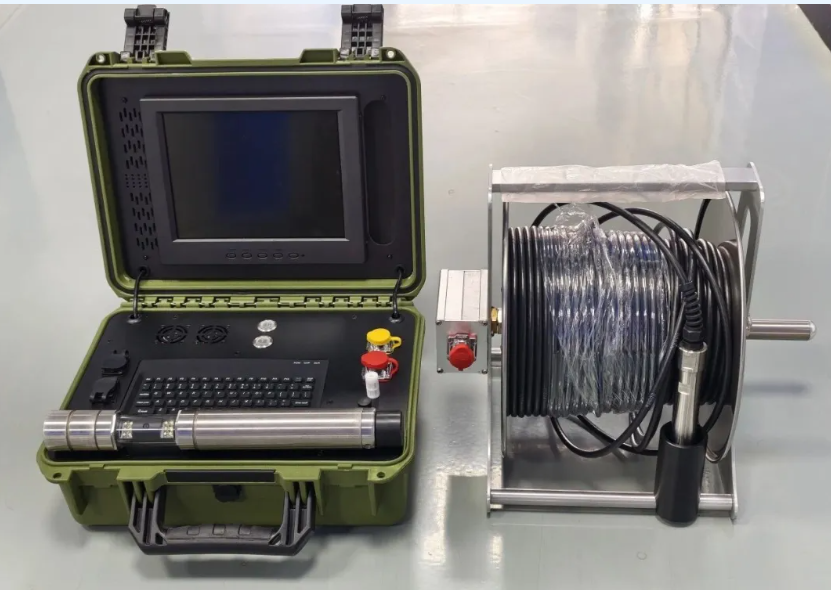
Remote information alone was not sufficient to accurately assess the actual downhole conditions. Therefore, we decided to visit the site in person, understand the actual working conditions, and then develop a suitable inspection plan.
The roads in the mountainous areas of Shanxi are winding and steep, making both equipment transportation and on-site operations challenging. After arriving at the gas collection well, our technical personnel communicated with the on-site team and carefully documented the wellhead conditions, estimated downhole environment, available power supply, and the working space required for equipment deployment and cable handling.
The special structure of horizontal wells creates more uncertainties during equipment deployment.
The AML921 Downhole Camera was used for this inspection. However, before starting the operation, we needed to address several key issues.
First, the complex passage structure of a horizontal well may cause the probe to encounter resistance from the well wall and curved sections during deployment and movement through the horizontal section, increasing the risk of cable obstruction and probe jamming.
Second, the simultaneous presence of gas escaping and water seepage inside the well places higher requirements on equipment protection, environmental adaptability, and image signal transmission stability.
Third, on-site power supply, equipment operation, and cable retrieval conditions also directly affect whether the entire inspection process can be completed smoothly.
If these factors are not properly considered in advance, image acquisition may be affected, and the cable could become stuck or even cause equipment damage.
For this reason, we did not rush to finalize the deployment plan. Instead, we worked with the on-site team to analyze potential risks based on the actual working conditions:
- Could water flow inside the well affect the camera’s image acquisition?
- How could we reduce the risk of probe jamming and cable obstruction when moving through the horizontal section?
- Could the on-site power supply and working conditions ensure the stable operation of the entire system?
- If the actual downhole conditions differed from our initial estimates, would there be room to adjust the inspection plan?
After several rounds of communication, operational procedure assessments, and comparisons between different solutions, we finally identified two inspection plans that were suitable for implementation on-site, providing a clear direction for the subsequent equipment application.
From identifying problems on-site to making targeted equipment improvements.
After returning to our company, we reviewed the issues identified during the inspection and considered the customer’s actual requirements. Based on these findings, we decided to carry out targeted upgrades to the AML921 Downhole Camera.
These upgrades were not simply about replacing individual components. Instead, we focused on the specific characteristics of the horizontal well, including gas flow, water seepage, and its complex internal passage structure.
We planned comprehensive improvements in several areas, including the probe protection structure, cable flexibility, signal transmission, and auxiliary structures for equipment deployment.
Through these improvements, we aim to reduce the impact of complex downhole conditions on equipment operation, improve the AML921 Downhole Camera’s adaptability to horizontal well environments, and provide customers with reliable downhole images and information for assessing actual well conditions.
In our view, different wells have different inspection challenges. A single fixed solution cannot simply be applied to every project.
Some wells require special consideration of well depth and equipment deployment distance, while others are limited by terrain and construction conditions. In this Shanxi project, the main challenges came from the special passage structure of the horizontal well and the coexistence of gas and water in the downhole environment.
This experience has further strengthened our belief that meaningful product development cannot be separated from practical field experience. Only by visiting the site, understanding the actual problems customers encounter, and bringing this experience back into the research, development, and production processes can we continuously improve our equipment to better meet real-world application requirements.
At present, the equipment upgrade work for this Shanxi horizontal well project is progressing steadily. Next, we will complete the equipment improvements according to the inspection plans already established, continue to follow up on subsequent commissioning and field tests, document on-site feedback, and further improve product performance.
We look forward to the upgraded AML921 Downhole Camera successfully completing the next downhole inspection at the Shanxi gas collection site. It is expected to provide clear images of actual downhole conditions, help the customer understand gas flow and water seepage in the horizontal well, and provide reliable information for subsequent maintenance, potential hazard investigations, and risk assessments.
The field is always our best research and development laboratory.
Every field inspection is an opportunity to identify problems and improve our products. We will continue to follow up on this project and turn the experience gained from on-site operations into improvements, enabling the AML921 Downhole Camera to better serve inspection requirements for unconventional wells, horizontal wells, and other complex downhole environments.
If you also have downhole inspection requirements for unconventional wells, horizontal wells, or other complex well conditions, and need customized configurations or technical solutions for the AML921 Downhole Camera, please feel free to contact AIMOLI.
We will develop more targeted equipment solutions and provide technical support based on your actual well conditions and inspection requirements.
