I Shared AIMOLI’s Latest Innovations in Groundwater Monitoring Technology
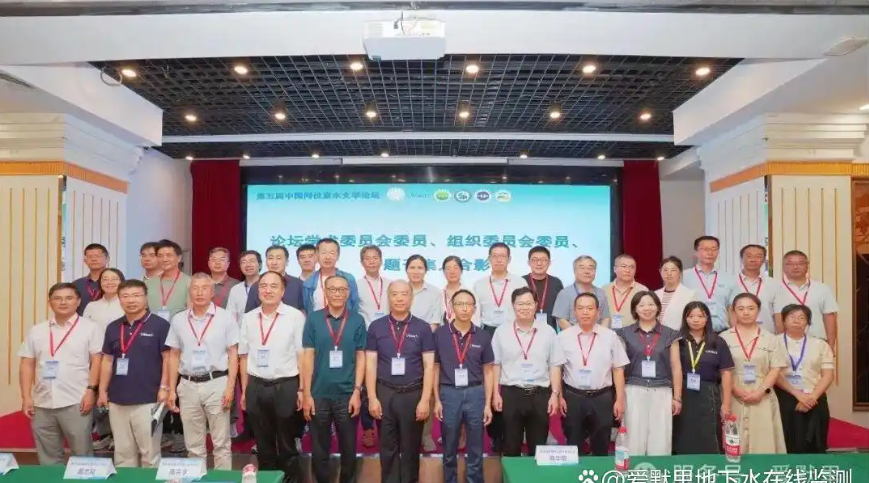
The 5th China Isotope Hydrology Forum (icWater5) was held in Urumqi, Xinjiang Uygur Autonomous Region, China, from August 8 to 11, 2025. The forum was initiated and organized by the China Commission on Tracers, Chinese National Commission for the International Association of Hydrological Sciences (CCT-CNC-IAHS). The theme of this year’s forum was “Water Security and Sustainable Development in Arid Regions.”
Researchers, academics, industry professionals, and postgraduate students from relevant scientific research, educational, and industrial fields gathered at the event to exchange ideas and share the latest research developments and achievements in isotope hydrology.
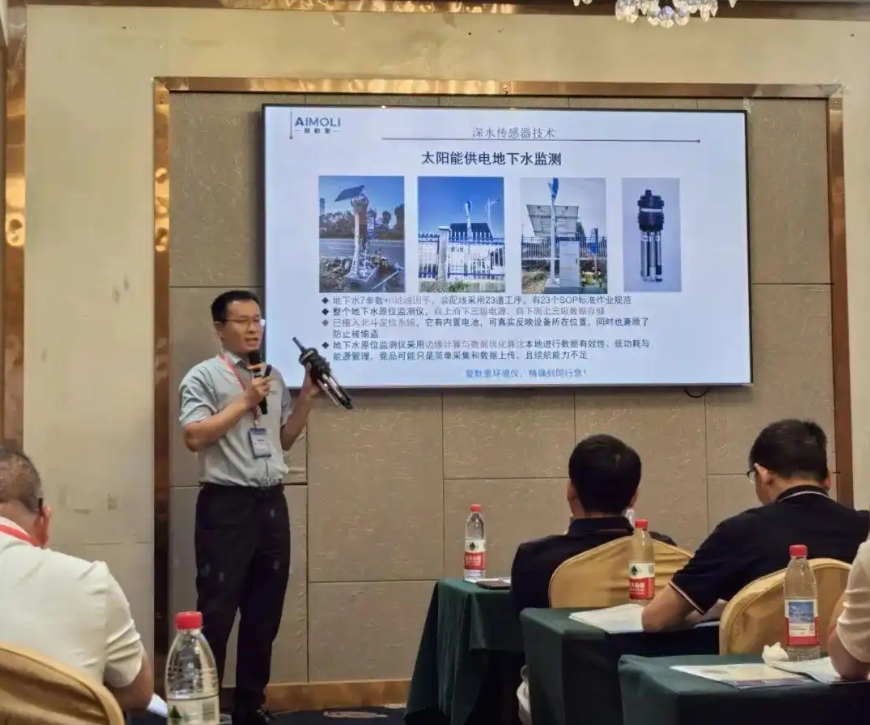
As the General Manager of AIMOLI (Hebei) Technology Co., Ltd., I was honored to be invited to participate in this forum and deliver a keynote presentation entitled “New Technologies for Groundwater Environmental Data Quality in 2025.”
During my presentation, I systematically introduced AIMOLI’s latest achievements in groundwater sampling and monitoring equipment, as well as our progress in digital and intelligent technologies.
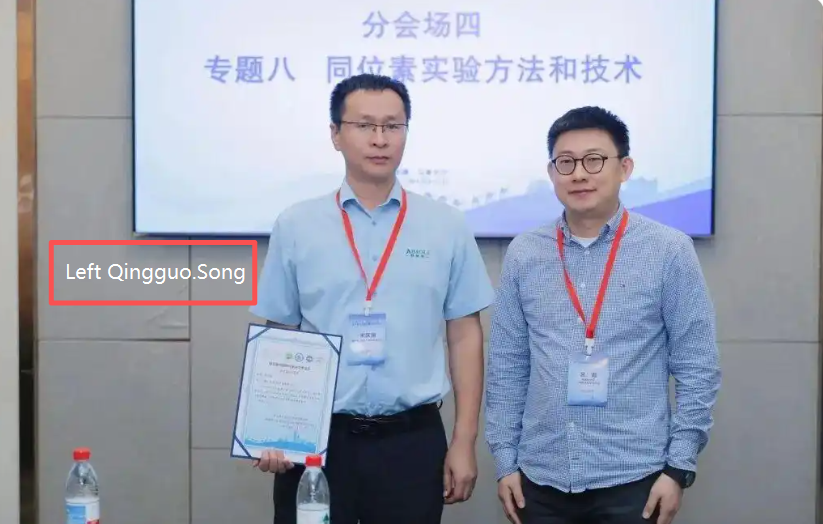
After my presentation, Researcher Jin Biao from the Guangzhou Institute of Geochemistry, Chinese Academy of Sciences, presented me with an academic presentation certificate. This recognition was meaningful to me and further strengthened my belief that there is considerable room for innovation and development in China’s domestic groundwater monitoring equipment industry.
1. Technological Innovation: Addressing Key Challenges in Groundwater Data Quality
During my presentation, I focused on three major technological innovations that AIMOLI has developed in recent years in the field of groundwater monitoring.
1. Deep-Water Sensor Technology
We have developed an ultra-small-diameter, multi-parameter integrated probe designed to address the challenges of simultaneous multi-parameter monitoring in deep-water environments.
The probe enables simultaneous monitoring of conventional water quality indicators and n regional factors.
Through its integrated design, it supports in-situ monitoring and analysis of multiple parameters in deep-water and layered environments, reducing the operational burden associated with using multiple separate instruments in traditional monitoring processes.
2. Groundwater Dynamic Field Technology
Groundwater flow field monitoring has always been an important part of groundwater environmental investigation and contaminant migration research.
To address the challenges of flow velocity measurement and environmental interference in complex groundwater environments, we have combined three-dimensional vector algorithms with machine learning algorithms to automatically correct environmental interference errors.
Currently, this technology can achieve a flow velocity measurement accuracy of 0.01 μm/s, with a measurement range of 0–30 mm/s.
We have also developed integrated equipment that combines contaminant migration analysis with intelligent pumping tests, incorporating patented technologies to provide more reliable fundamental data for groundwater dynamic field research and isotope hydrological models.
For related groundwater flow measurement technology, see AML912 Groundwater flow meter.
3. Groundwater Sampling Technology
In groundwater sampling equipment development, we have focused on solving practical problems such as complicated equipment operation and low on-site working efficiency.
For example, our newly developed groundwater three-level meter integrates a water level meter, well depth meter, and drawdown meter into a single probe. All three measurements can be completed with just one lowering operation into the well.
In addition, our digital and intelligent groundwater sampler and bladder pump capable of continuous water discharge are also among the products into which we have invested considerable R&D resources in recent years.
All these technological developments are driven by practical problems encountered in real-world projects. Through equipment integration, intelligent control, and technological innovation, we aim to make groundwater sampling and monitoring more efficient and accurate.
I have always believed that domestic instruments must go beyond simply achieving basic functionality. Particularly in deep wells and complex geological environments, we must directly address issues such as data drift, measurement errors, and data reliability.
Our goal is to ensure that every piece of groundwater monitoring data can withstand verification, be traced back to its source, and be analyzed and applied with confidence.
2. In-Depth Discussions with Leading Experts: Identifying a New Direction for Isotope Monitoring Equipment Development
In addition to sharing AIMOLI’s technological achievements, I greatly valued the opportunity to communicate face-to-face with leading experts in relevant fields during the forum.
During the event, I had an in-depth technical discussion with Researcher Pang Zhonghe from the Institute of Geology and Geophysics, Chinese Academy of Sciences.
Our discussions focused on how groundwater monitoring technologies could be integrated with the research requirements of isotope hydrology.
Currently, China’s isotope hydrology research still faces certain challenges, including relatively high dependence on imported high-end instruments and insufficient integration of monitoring data.
How to combine existing groundwater monitoring technologies with isotope tracer research and develop domestically manufactured equipment that better meets practical scientific research requirements is a direction worth exploring further.
Based on the current research landscape and practical scientific requirements, Researcher Pang Zhonghe offered us some very valuable suggestions:
He suggested combining AIMOLI’s existing groundwater technologies with the requirements of isotope hydrology research, with a particular focus on developing in-situ monitoring equipment that integrates groundwater dynamic field monitoring with isotope tracing technology, thereby advancing technological innovation and addressing gaps in industry applications.
This discussion was extremely valuable to me.
In the past, our product development efforts had focused primarily on practical applications such as groundwater sampling, flow field monitoring, and contaminant migration analysis.
However, through this in-depth discussion with an expert, I gained a new perspective on the future development of groundwater monitoring technologies.
Combining scientific research requirements with equipment manufacturing represents not only an important opportunity for the development of domestically manufactured instruments but also a key R&D direction that AIMOLI should focus on in its next stage of development.
We will carefully study the expert’s recommendations and gradually translate them into specific product development plans.
3. Corporate Vision: Advancing Domestic High-End Groundwater Instruments Through Independent Innovation
This trip to Urumqi was a highly valuable experience for both me personally and AIMOLI.
From groundwater sampling equipment to groundwater dynamic field monitoring and isotope tracer in-situ monitoring equipment, I have become increasingly aware that groundwater environmental monitoring is not simply about manufacturing a few instruments.
It requires the integration of sensor technology, measurement technology, data algorithms, equipment manufacturing, and actual scientific research requirements.
For AIMOLI, future development cannot be limited to improving existing products. We must also proactively explore deeper and more advanced technological fields.
As I realized through the discussions during the forum, Researcher Pang Zhonghe’s professional guidance has given us a clearer direction for our next stage of technological development.
Going forward, I will continue leading our team in increasing R&D investment, deepening interdisciplinary technological integration, and conducting technical research in groundwater dynamic field monitoring, isotope tracing, and in-situ monitoring equipment.
We will also work to transform more R&D achievements into practical applications.
I have always had a goal: To enable Chinese users to access high-end groundwater monitoring instruments that are independently developed and manufactured in China, and to make domestically manufactured equipment truly competitive with internationally advanced technologies.
Through continuous independent innovation, we hope to gradually overcome the technological barriers in high-end groundwater monitoring equipment and provide more reliable domestically manufactured equipment options for groundwater resource investigations, environmental monitoring, and water security research in China.
There is still a long way to go, but I believe that as long as we remain committed to independent R&D and continue developing products based on real-world needs, China’s domestic groundwater monitoring equipment industry will have tremendous opportunities for growth.
This is my vision for AIMOLI’s future development and the direction in which we will continue working.
