How to Choose Groundwater Sampling Equipment for Chemical Plants? AIMOLI Provides Professional Sampling Solutions
Recently, we received an inquiry from the environmental protection manager of a chemical company. The company wanted to purchase a professional groundwater sampling system for routine groundwater environmental monitoring and self-inspection within its plant.
Previously, they mainly relied on manual sampling with bailers. As groundwater monitoring became a regular requirement, some limitations of traditional manual sampling gradually became apparent: low operating efficiency, susceptibility to human factors during sampling, and increasing requirements for standardized sampling, on-site testing, and data quality control.
As a result, the customer decided to purchase a professional groundwater sampling system.
However, a new problem emerged when they started looking for equipment. There were many types of groundwater sampling equipment on the market, with significant differences in prices, configurations, and technical specifications among different brands. For purchasing personnel who were not familiar with this type of equipment, choosing the right system to meet the actual needs of a chemical plant was not easy.
After making inquiries from various sources, the customer eventually contacted AIMOLI.
During our communication, I found that although the customer had clear groundwater self-inspection requirements, they were not very familiar with the functions of professional sampling equipment, technical specifications, or relevant sampling standards.
Therefore, we did not rush to recommend a particular product. Instead, we first learned about the actual site conditions, monitoring requirements, and operating environment. We then explained the key procedures involved in groundwater sampling, on-site testing requirements, and the important factors to consider when selecting equipment, based on the relevant technical specifications for groundwater sampling.
Considering the special environment of chemical plants, we believed that the equipment needed to have good corrosion resistance, be easy to operate, adapt to different monitoring wells, and reduce the workload of on-site personnel as much as possible.
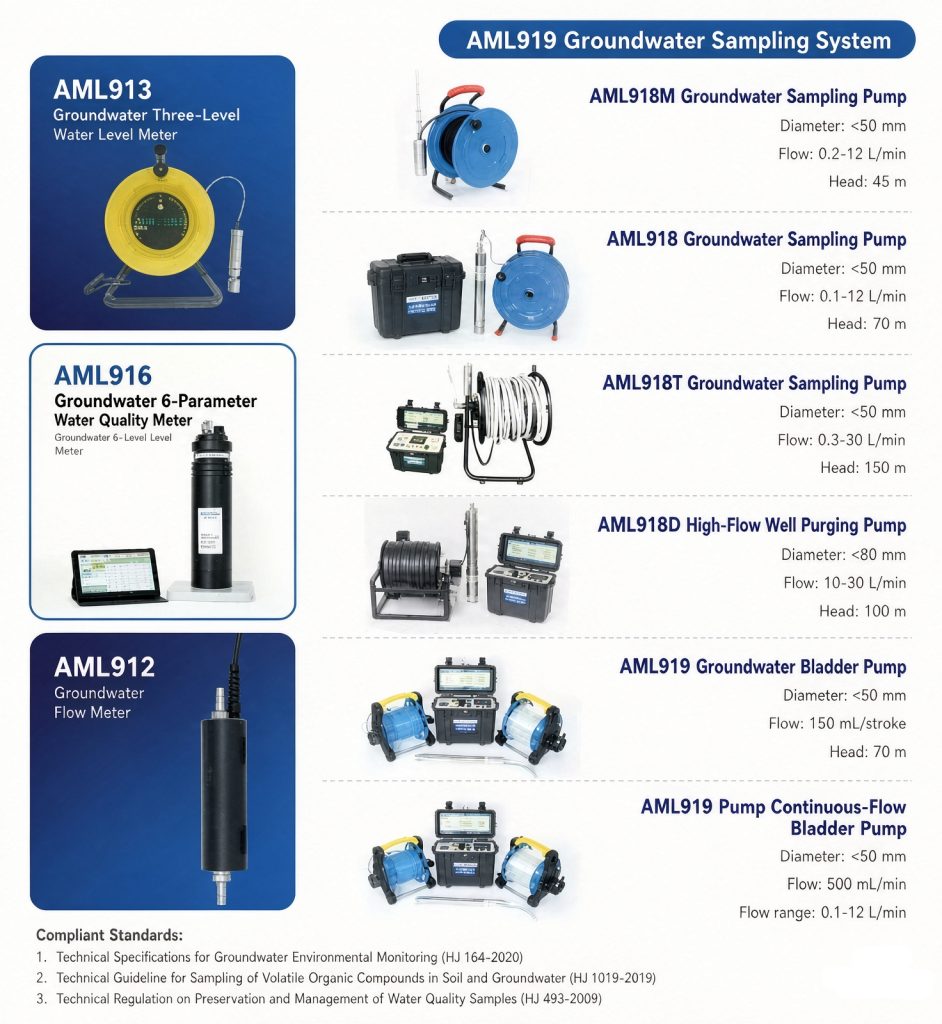
After a comprehensive evaluation, we provided the customer with a groundwater sampling solution consisting of:
Groundwater Sampling Pump + Six-Parameter Meter + Three-Level Water Level Meter.
This configuration covers the main procedures of groundwater well purging, sample collection, on-site water quality parameter measurement, and water level measurement. It can help customers establish a more complete and standardized groundwater self-inspection process.Complete Process of Groundwater Sampling
After listening to our explanation, the customer gained a clearer understanding of the equipment configuration and actual operating procedures and recognized the proposed solution.
Why Is This Groundwater Sampling System Suitable for Chemical Plants?
In my opinion, equipment selection should not be based solely on price and technical specifications. More importantly, the equipment must be able to solve the customer’s actual problems.
The AIMOLI groundwater sampling system configured for this customer has several key features.
1. 316L Stainless Steel Pump Body for Complex Operating Environments
Groundwater sampling equipment frequently comes into contact with groundwater of different water qualities. The operating environment in chemical plants also places higher demands on equipment materials and corrosion resistance.
This groundwater sampling pump features a 316L stainless steel body, offering certain advantages in corrosion resistance. It can also withstand ordinary impacts during daily transportation and on-site operation, making it more suitable for applications where equipment durability is important.
2. Composite Cable Design for Easier On-Site Operation
For companies that need to conduct groundwater monitoring regularly, the convenience of equipment operation directly affects on-site work efficiency.
This sampling pump is equipped with a composite cable, reducing the need for repeated pipe replacement during well installation and sampling operations. This makes equipment installation, lowering, and retrieval more convenient. It is also easier for on-site personnel with different levels of experience to learn the basic operating procedures.
3. Flow Rate Range of 0.1–12 L/min for Both Well Purging and Sampling
Different monitoring wells have different site conditions, and groundwater well purging and sample collection have different flow rate requirements.
This sampling pump has a flow rate range of 0.1–12 L/min, which can be adjusted according to actual on-site requirements. It can be used for low-flow sampling under low-flow conditions and for well purging at higher flow rates.
One pump can handle different operational requirements, reducing the need for repeated equipment purchases and making on-site equipment configurations more flexible.
4. Integrated Equipment Configuration Covering the Main Groundwater Monitoring Procedures
For this customer, we did not simply provide a single sampling device. Instead, we configured a combined solution consisting of a groundwater sampling pump, a six-parameter meter, and a three-level water level meter.
The groundwater sampling pump is responsible for well purging and groundwater sample collection. The six-parameter meter is used for on-site water quality parameter testing, while the three-level water level meter is used for measuring water levels and well depth.
With a properly configured combination of equipment, customers can reduce equipment preparation and coordination issues during on-site groundwater self-inspection and improve overall work efficiency.
The specific equipment configuration and operating methods should be further confirmed according to monitoring well conditions, the sampling plan, and applicable technical specifications.
Starting with Customer Needs Instead of Simply Recommending Products
This cooperation once again reminded me that when many customers purchase groundwater monitoring equipment, what they truly lack is not product information, but professional equipment selection advice.
In particular, chemical companies, mines, and industrial parks often have relatively complex groundwater monitoring environments. Different sites have different water quality conditions, monitoring well structures, sampling requirements, and on-site operating conditions.
If equipment is recommended solely based on product specifications, customers may end up purchasing equipment that does not fully meet their actual operating requirements.
Therefore, when providing solutions to customers, we focus on several key aspects:
- Operating Environment: Is the water quality unusual, or is there a corrosive environment? What requirements does this place on equipment materials?
- Monitoring Requirements: Is the equipment intended for routine groundwater self-inspection, environmental monitoring, or sampling for a specific investigation project?
- Monitoring Well Conditions: Do the well depth, well diameter, and on-site power supply meet the equipment’s operating requirements?
- Sampling Requirements: Does the project involve low-flow sampling, well purging, and on-site water quality parameter measurement?
- Equipment Configuration: How should the sampling pump, water quality meter, and water level meter be properly combined to avoid unnecessary duplicate purchases?
Only by understanding these issues can we provide customers with solutions that are genuinely suitable for their actual operating conditions.
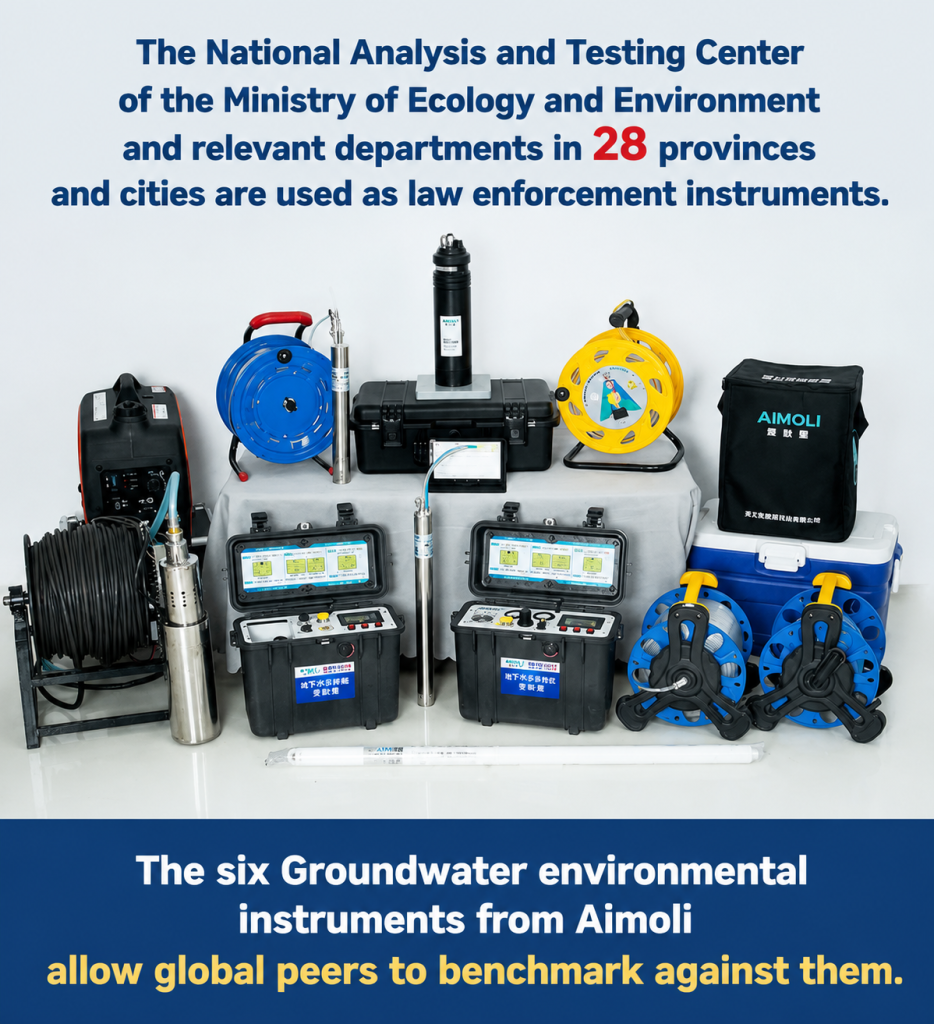
Currently, AIMOLI groundwater sampling equipment has been used by environmental monitoring stations in 28 provinces and municipalities across China, accumulating application experience in different regions and operating environments.
In addition to chemical plant groundwater monitoring projects, AIMOLI equipment has also been used in groundwater sampling applications involving narrow-diameter monitoring wells and challenging field conditions. These practical applications demonstrate the importance of selecting sampling equipment according to actual well conditions and project requirements. You can also read our Case Study: Well Water Sampling from Narrow-Diameter Well Casings to learn more about how AIMOLI equipment addresses specific groundwater sampling challenges.
We also hope to use our experience from these actual projects to help more customers avoid unnecessary difficulties when selecting equipment and conducting groundwater monitoring.
How Should Chemical Plants, Mines, and Industrial Parks Choose Groundwater Sampling Equipment?
If your company also needs to conduct groundwater environmental monitoring or routine self-inspection, we recommend clarifying the on-site monitoring requirements and applicable technical specifications before purchasing equipment, and then selecting equipment according to actual conditions.
AIMOLI has long been focused on groundwater monitoring equipment and related solutions. Whether you need a groundwater sampling pump, a six-parameter meter, a three-level water level meter, or a combination of different devices, we can provide corresponding product selection advice and technical recommendations based on your operating environment, monitoring well conditions, and project requirements.
We have always believed that good equipment should not only offer reliable performance but also genuinely suit the customer’s operating environment.
If you are looking for groundwater sampling equipment for a chemical plant, mine, or industrial park, please feel free to contact AIMOLI. Tell us about your actual operating conditions and monitoring requirements, and we will help you select suitable equipment and configuration solutions from a professional perspective.
AIMOLI Environmental Instruments — Precision for Every Professional Need.
