Sharing Innovations in Groundwater Sampling and Monitoring Technology: Improving Environmental Monitoring Efficiency and Quality Through Independent R&D
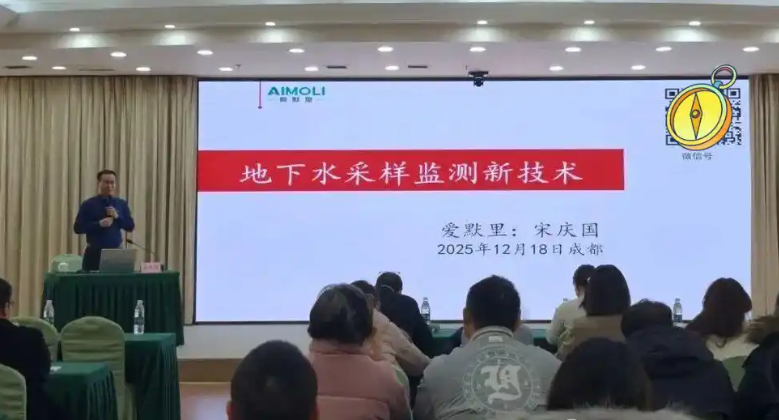
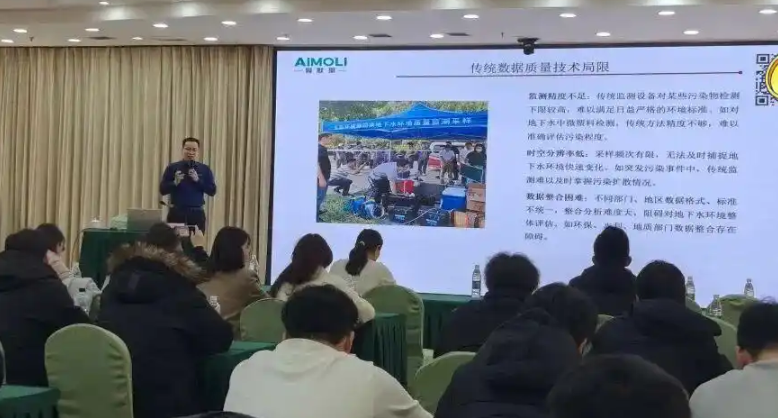
From 14:30 to 17:00 on December 18, 2025, a public-interest lecture on new technologies for groundwater sampling and monitoring was successfully held. The event was jointly organized by the Chengdu Society of Environmental Sciences and its Professional Committee on Soil and Groundwater Pollution Prevention and Control.
The lecture was hosted by Professor Liu Gu from the College of Ecology and Environment at Chengdu University of Technology, who also serves as Director of the Professional Committee on Soil and Groundwater Pollution Prevention and Control. As the founder of AIMOLI and a senior engineer, I was invited to serve as the keynote speaker. I joined professionals from environmental consulting, environmental monitoring, scientific research institutions, and other fields to exchange ideas and discuss innovations in groundwater sampling and monitoring technology, breakthroughs in key technologies, and practical applications.
Focusing on Environmental Monitoring Instrument R&D and Addressing Industry Needs Through Technological Innovation
I have been engaged in environmental monitoring instrument R&D for 18 years. Throughout these years, I have remained focused on technological innovation and product development in the field of environmental monitoring. I hope to solve practical problems encountered in frontline environmental monitoring through independent R&D, ensuring that monitoring equipment genuinely serves field projects, helps users improve work efficiency, reduces operating costs, and enhances the standardization and reliability of monitoring work.
In terms of technological R&D and achievement transformation, as a project leader, I have led eight provincial- and municipal-level science and technology projects, including provincial key R&D programs and projects funded by the Central Government’s Guidance Funds for Local Science and Technology Development. I have also participated in more than ten provincial- and municipal-level research projects and obtained multiple core patents.
In my view, the value of environmental monitoring instruments lies not only in breakthroughs in technical specifications, but also in whether they can withstand the test of practical applications and genuinely address industry challenges. Guided by this philosophy, my team at AIMOLI and I have continued to focus on groundwater sampling and monitoring technology, committed to advancing related equipment toward automation, digitalization, and intelligent operation, and promoting the transformation of scientific research achievements into technologies and products that genuinely serve frontline applications.
Focusing on Four Key Technological Innovations and Sharing the Results of Independent R&D and Practical Applications
During this lecture, I combined technical principles, practical project cases, and the application of relevant equipment independently developed by AIMOLI to share the latest innovations and application value of four key technologies. I hoped to provide new technical ideas for environmental consulting and monitoring institutions, as well as researchers, and help them achieve cost reduction, efficiency improvement, and quality enhancement in practical projects.
I. Intelligent Digital Groundwater Sampling System: Making Sampling More Efficient and Smarter
Traditional groundwater sampling involves multiple operational procedures. Personnel often need to carry various types of equipment and repeatedly perform measurements, well purging, and sampling operations down the well. This not only consumes considerable manpower but also affects overall project execution efficiency.
To address these practical challenges, we have continued to advance the integration and intelligent development of groundwater sampling technology. We developed an intelligent digital groundwater sampling system that uses a single digital probe deployment to complete well diameter, water level, and well depth measurements, determine the sampling position of the screened interval, and carry out related operations such as well purging and sampling.
By integrating the sampling process and key operational procedures, the system can reduce groundwater sampling time by approximately 50% and lower labor costs by at least 50%. While meeting field operation requirements, tasks that traditionally require four to six people working together can be completed by just two people, significantly improving field operation efficiency.
I have always believed that upgrading groundwater sampling equipment through intelligent technology should not simply mean adding automated functions. Instead, it should begin with the entire operational process, reduce repetitive operations, and minimize human intervention, allowing frontline personnel to complete sampling tasks with less manpower and greater efficiency.

II. Deep-Water Sensor Technology: Expanding Monitoring Capabilities in Complex Environments
To address the limitations of traditional surface water monitoring equipment in terms of application depth and adaptability to complex operating conditions, we have carried out innovative designs in deep-water sensor technology.
Through the design of a three-level power management system and a four-level data storage system, the relevant equipment can better adapt to different application scenarios and provide technical support for geological exploration, environmental protection, water conservancy projects, scientific research monitoring, and other fields.
In addition, to address the potential loss of field monitoring equipment during use, we have equipped devices used in relevant field applications with BeiDou positioning modules, providing support for equipment positioning and tracking and further improving the convenience of field operation management.
For environmental monitoring equipment, reliability is reflected not only in measurement performance but also in its ability to operate continuously in complex environments and support field management. Only by fully considering actual application scenarios can equipment genuinely meet the needs of professional users.
III. Groundwater Dynamic Field Technology: Providing Key Data for Pollutant Migration Analysis
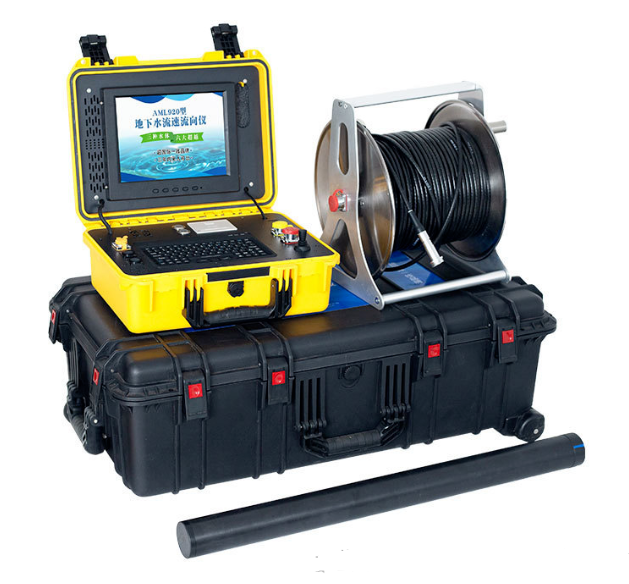
Groundwater velocity and flow direction are important factors in analyzing pollutant migration pathways, assessing pollution diffusion trends, and conducting contaminated site investigations.
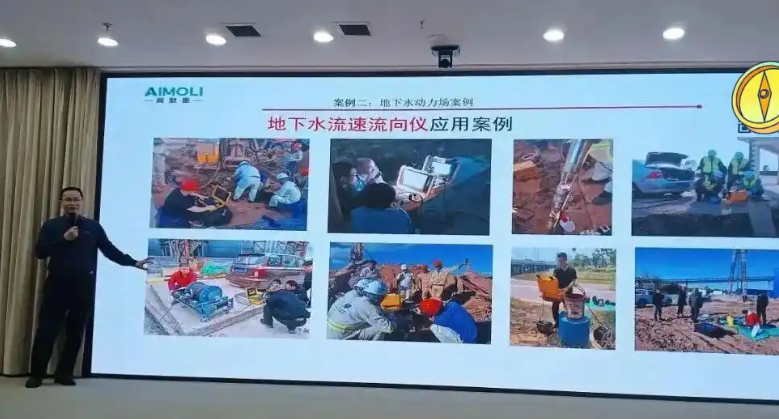
During the lecture, I focused on the applications of groundwater dynamic field monitoring technology and shared practical experience from project implementation, including contaminated site investigations, pollution leakage investigations, and groundwater environmental monitoring in chemical industrial parks.
I also introduced the practical application of this technology in a water-inrush accident at a potash mine in Laos, demonstrating the value of groundwater flow information under complex geological and hydrological conditions.
Through these cases, I hoped to help participants further understand that groundwater monitoring should not be limited to obtaining water quality indicators. It should also incorporate groundwater movement characteristics for comprehensive analysis, providing more complete data support for pollution investigations, risk assessment, and engineering decisions.
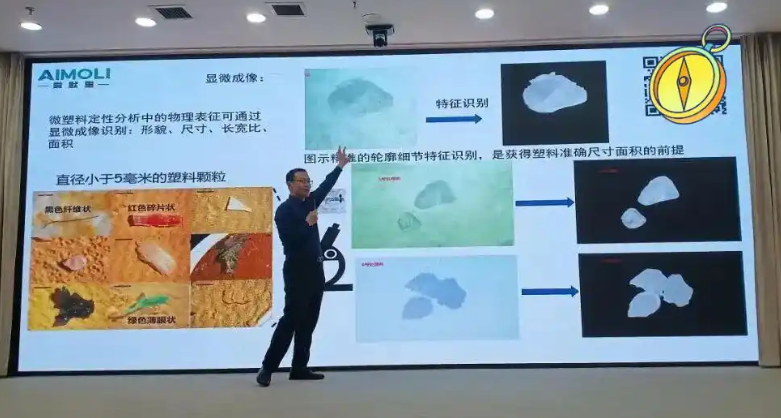
IV. Water Microplastics Monitoring Technology: Building a Multi-Scenario Monitoring System
As environmental monitoring needs continue to evolve, water microplastics pollution monitoring has also attracted increasing attention from research institutions and the environmental monitoring industry. Improving detection efficiency, reducing manual operations, and meeting monitoring needs in different scenarios are important directions for continued exploration in this field.
To address these needs, we have established a multi-scenario monitoring system covering laboratory analysis, in-situ monitoring, and portable applications to accommodate different monitoring environments and usage requirements.
Among these, the laboratory microplastics monitoring module has achieved fully automated analysis, helping reduce manual operations and improve the automation level of the analytical process, thereby providing technical support for relevant scientific research and monitoring work.
I believe the development of environmental monitoring technology must balance professionalism, practicality, and ease of operation. By continuously improving monitoring solutions for different scenarios, we can better meet the diverse needs of laboratory research, field investigations, and practical environmental monitoring.
Engaging in In-Depth Technical Discussions and Jointly Exploring Industry Development
During the discussion session, participating teachers and experts actively raised questions about technical principles, equipment performance, field operations, and project applications. I provided detailed answers to each question based on my R&D experience and practical project experience.
The atmosphere of the discussion was enthusiastic. Participants were not only interested in technological innovation itself but also placed great importance on the actual performance of the relevant equipment in real-world projects and on how to translate technological advantages into improvements in project execution efficiency and monitoring quality.
After the lecture, many participants proactively exchanged contact information with me and expressed their willingness to learn more about AIMOLI’s related technologies and products and explore potential future cooperation. They also hoped that AIMOLI would continue participating in public-interest technical lectures of this kind to provide more technical exchanges and professional support for frontline environmental protection personnel, environmental monitoring institutions, and scientific research organizations.
These positive responses greatly encouraged me. For me, the significance of technological R&D lies not only in obtaining patents or achieving product breakthroughs, but also in bringing technology into actual project settings, solving practical problems, and continuously improving through communication and cooperation.
Remaining Committed to Independent R&D and Serving Groundwater Environmental Protection Through Professional Technology
Reflecting on this technical presentation, I have gained an even deeper appreciation of the fact that progress in groundwater sampling and monitoring technology depends not only on long-term R&D accumulation but also on exchanges and feedback from industry colleagues during practical applications.
In the future, I will continue to lead the AIMOLI team in focusing on environmental monitoring instrument R&D, continuously advancing key technological innovation and product application exploration in areas such as groundwater sampling, groundwater monitoring, groundwater dynamic field analysis, and water microplastics detection.
We hope to provide practical solutions for environmental consulting and monitoring institutions, scientific research organizations, and users in related industries through more efficient, accurate, and intelligent environmental monitoring technologies and equipment. We also aim to further integrate scientific research achievements with practical applications and contribute more to groundwater environmental protection and the development of ecological environment monitoring.
Remaining committed to independent R&D, addressing actual needs, and solving field problems through technological innovation are the directions in which my team at AIMOLI and I will continue to work.
