A Closed Sampling Solution for Groundwater Monitoring Wells
The AML919 groundwater sampler features a 316 stainless steel pump body and corrosion-resistant PTFE sampling tubing. The entire sampling process is fully enclosed, effectively preventing cross-contamination of water samples. For groundwater VOCs sampling, the VOCs loss rate is less than 0.5%, with a recovery rate of up to 98%.
Therefore, for acidic deep-well VOCs sampling in contaminated sites such as chemical pollution sites, landfills, and mining areas, selecting a groundwater sampler with corrosion resistance, closed sampling, and deep-well adaptability is an important step toward improving sampling quality and reducing rework.
Why Is Acidic Deep-Well VOCs Sampling Prone to Problems?
At typical contaminated sites such as chemical pollution sites, landfills, and mining areas, groundwater monitoring wells are often acidic and may also have complex conditions such as high salinity and high sediment content.
These complex conditions increase the difficulty of groundwater VOCs sampling. Sampling equipment must not only provide good sealing performance but also offer corrosion resistance while meeting the requirements of deep-well groundwater sampling in terms of lifting capacity, stability, and field operating efficiency.
For VOCs (volatile organic compounds) sampling, excessive contact between the water sample and air during collection and transportation may increase VOCs loss. Therefore, closed sampling, low VOCs loss, and low cross-contamination are key factors that need to be considered in deep-well VOCs sampling.
A Real Deep-Well VOCs Sampling Case
Last month, I received a call from Mr. Liu, a manager at an environmental treatment and remediation company in Shandong.
Mr. Liu explained that their projects currently mainly use bailers, peristaltic pumps, and domestic bladder pumps for groundwater monitoring well sampling.
However, when conducting VOCs sampling at deep wells in contaminated sites, they frequently experienced serious VOCs loss and cross-interference. As a result, samples often had to be retaken, which not only wasted a significant amount of labor but also affected project schedules.
To meet their project requirements, they planned to purchase a new batch of groundwater monitoring well sampling equipment, with the main goal of solving VOCs loss, cross-contamination, and equipment adaptability issues during deep-well VOCs sampling.
Traditional bailers, peristaltic pumps, and some domestic bladder pumps often face problems such as high VOCs loss, cross-contamination, insufficient lifting capacity, and low well-purging efficiency under acidic water and deep-well conditions. These issues can directly affect groundwater testing data and project acceptance schedules.
What Are the Limitations of Traditional Groundwater VOCs Sampling Methods?
1. Bailer: Low Cost, but High Disturbance and Significant VOCs Loss
Bailers have a simple structure and relatively low operating cost, so they are widely used for conventional groundwater sampling. However, bailers have certain limitations in deep-well VOCs sampling.
Disturbance and Mixing Can Cause Cross-Contamination
During lowering and lifting, bailers can cause water disturbance, potentially mixing the water in the monitoring well and disrupting the original stratification, thereby increasing the risk of cross-interference.
Significant Aeration Can Cause VOCs Loss
VOCs are volatile compounds. During bailer sampling, excessive contact between the water sample and air can cause VOCs loss and affect subsequent analytical results.
Difficult Sampling Depth Control and High Labor Intensity
For deep groundwater monitoring wells, bailers need to be repeatedly lowered and lifted. Sampling depth is relatively difficult to control, making deep-well operations time-consuming and labor-intensive.
Therefore, for deep-well contaminated sites where VOCs sampling quality is particularly important, bailers should be selected carefully.
2. Peristaltic Pumps and Buckets: Suitable for Conventional Sampling, but Limited for VOCs Sampling
Conventional peristaltic pumps and buckets have certain applications in routine groundwater sampling. However, during groundwater VOCs sampling, water samples can easily come into contact with air.
Because VOCs are volatile, the longer a water sample is exposed to air, the more attention needs to be paid to potential VOCs loss.
Therefore, conventional peristaltic pumps and buckets are more suitable for routine parameter sampling. For VOCs projects, especially projects with strict sample preservation requirements, the equipment’s closed sampling capability needs to be carefully evaluated.
3. Domestic Bladder Pumps: Reasonable Sealing, but Insufficient Deep-Well Lifting Capacity
Compared with bailers, bladder pumps offer certain advantages in closed sampling and can therefore be used in some groundwater VOCs sampling applications.
However, most domestic bladder pumps on the market have a lifting capacity of only around 60 meters. When projects involve deep groundwater monitoring wells, lifting capacity may become an important limitation.
In addition, some equipment has relatively complicated operating procedures, and the transition between well purging and sampling is not sufficiently smooth, which may reduce field groundwater sampling efficiency.
Comparison of Traditional Groundwater Sampling Methods
| Sampling Method | Applicable Scenarios | VOCs Sampling Limitations | Deep-Well Adaptability |
|---|---|---|---|
| Bailer | Conventional parameters, shallow wells | High disturbance, significant aeration, high VOCs loss | Difficult depth control, high labor intensity |
| Peristaltic Pump/Bucket | Conventional parameters | Water samples are easily exposed to air, limited VOCs retention | General, mainly suitable for shallow wells |
| Domestic Bladder Pump | Some VOCs applications | Reasonable sealing, but generally insufficient lifting capacity | Generally suitable only for ≤60 m |
From the perspective of actual project requirements, when acidic water + deep wells + VOCs sampling occur simultaneously, equipment price should not be the only consideration. The groundwater sampler should be comprehensively evaluated based on its sealing performance, corrosion resistance, lifting capacity, and sampling stability.
Full-Process Deep-Well VOCs Sampling Solution
For the core challenges of deep-well VOCs sampling under acidic water conditions, we recommend a coordinated “Measurement—Well Purging—Sampling—Determination” solution.
Step 1: Measurement — AML913 Groundwater Three-Water-Level Meter
Use the AML913 Groundwater Three-Water-Level Meter to obtain well depth, drawdown, and water level in a single deployment, providing basic data for subsequent well purging and sampling.
Step 2: Well Purging — AML918 Groundwater Well Purging Pump
Use the AML918 Groundwater Well Purging Pump for well purging. It supports high-flow-rate well purging and low-flow-rate sampling with one pump for both applications, improving field operating efficiency.
Step 3: Determination — AML916 Groundwater 6-Parameter Meter
Use the AML916 Groundwater 6-Parameter Meter for on-site testing and rapid determination of the well-purging endpoint, reducing uncertainty caused by relying solely on manual experience.
Step 4: Sampling — AML919 Bladder Pump Sampler
Finally, use the AML919 Bladder Pump Sampler for groundwater VOCs sampling.
The AML919 features a 316 stainless steel pump body and corrosion-resistant PTFE sampling tubing. The entire sampling process is fully enclosed, making it suitable for deep-well VOCs sampling under acidic, high-salinity, and other complex water conditions.
The AML919 has a VOCs loss rate of less than 0.5% and a recovery rate of up to 98%, providing a targeted solution for VOCs loss and cross-contamination problems that can occur during deep-well VOCs sampling.
Key Advantages of the AML919 Groundwater Sampler
316 Stainless Steel Pump Body
The AML919 uses a 316 stainless steel pump body, making it suitable for complex groundwater environments such as acidic and high-salinity water and meeting the corrosion-resistance requirements of groundwater sampling at contaminated sites.
PTFE Corrosion-Resistant Sampling Tubing
The AML919 uses PTFE sampling tubing, further improving the equipment’s adaptability to complex groundwater conditions.
Fully Enclosed Sampling
The AML919 provides fully enclosed sampling throughout the entire sampling process, reducing contact between the water sample and air, effectively preventing cross-contamination and reducing VOCs loss.
VOCs Loss Rate Below 0.5%
For the VOCs loss issue that is particularly important in VOCs sampling, the AML919 achieves a VOCs loss rate of less than 0.5%.
Recovery Rate Up to 98%
The AML919 groundwater sampler achieves a VOCs recovery rate of up to 98%, making it suitable for projects with high requirements for groundwater VOCs sampling quality.
What Requirements Does the AML919 Groundwater Sampling System Meet?
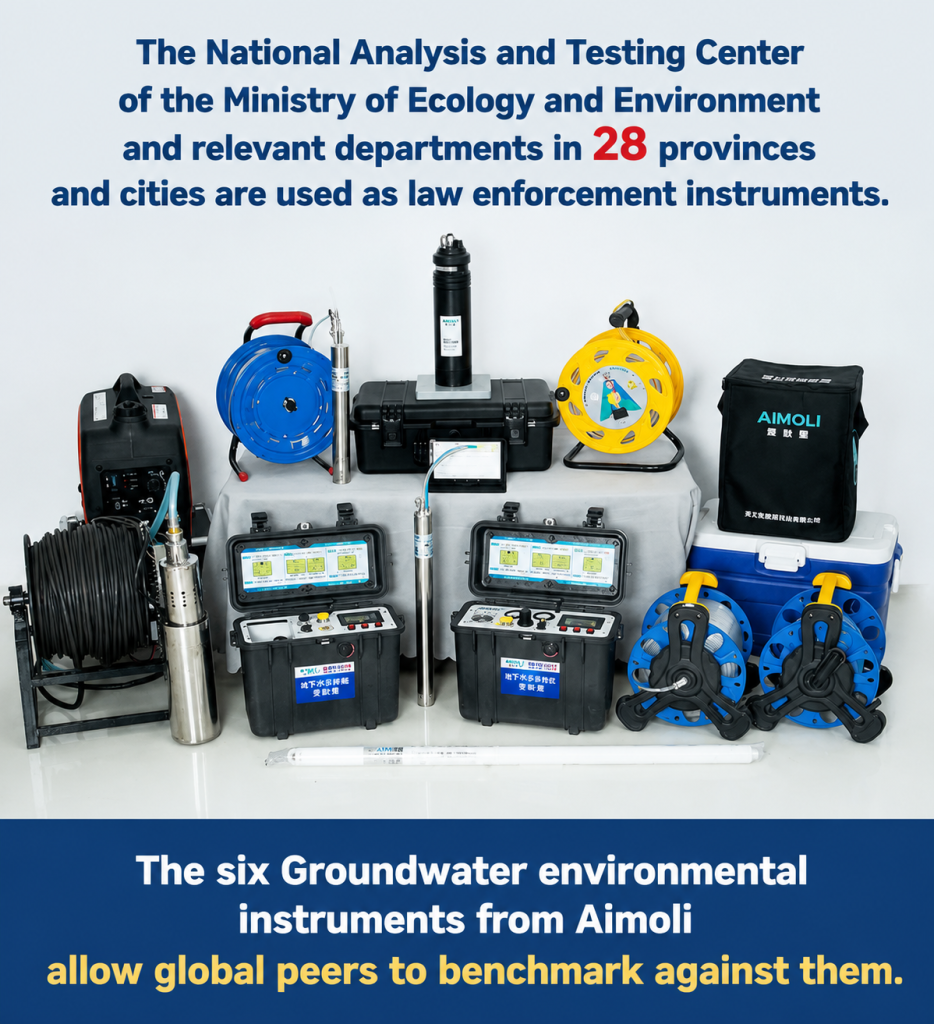
The AML919 groundwater sampling system has been used as an enforcement instrument by the National Analysis and Testing Center of the Ministry of Ecology and Environment and relevant departments in 28 provinces and cities. It complies with the relevant technical requirements of HJ 164-2020, Technical Specification for Groundwater Environmental Monitoring.
For groundwater monitoring projects at contaminated sites, sampling equipment must not only solve the problem of whether sampling can be performed. It must also address data authenticity, standardization, and traceability throughout the sampling process.
Therefore, when selecting groundwater VOCs sampling equipment, the actual project requirements should be considered comprehensively, including equipment materials, sealing performance, sampling methods, and relevant technical requirements.
User Feedback: No More Frequent Rework for Deep-Well VOCs Sampling
Because Mr. Liu’s main project problem was VOCs interference during deep-well VOCs sampling at groundwater monitoring wells in contaminated sites, he ultimately decided to first purchase the AML919 bladder pump sampler.
After one month of use, Mr. Liu provided the following feedback:
“After switching to the AML919, both conventional sampling in shallow wells and deep-well VOCs sampling have been solved. Now the project can basically pass the sampling process in one attempt. The data is accurate and compliant, and we no longer need to redo the sampling. The workload for field personnel has been significantly reduced, and overall efficiency has doubled.”
For environmental treatment and remediation companies that conduct groundwater monitoring over the long term, reducing rework can not only lower field workload but also improve the overall execution efficiency of contaminated-site groundwater sampling projects.
How Should Equipment Be Selected for Acidic Deep-Well VOCs Sampling?
Acidic water conditions and deep-well conditions are two major challenges in groundwater VOCs sampling.
When selecting a groundwater sampler, it is recommended to focus on the following aspects:
First, equipment materials.
Acidic and high-salinity groundwater places higher requirements on the corrosion resistance of sampling equipment. The materials of the pump body and sampling tubing should therefore be considered.
Second, sampling sealing performance.
For VOCs sampling, special attention should be paid to contact between the water sample and air. Closed sampling is an important factor in reducing VOCs loss.
Third, deep-well adaptability.
It is not enough to consider whether the equipment can pump water. The actual monitoring well depth must also be considered when selecting equipment.
Fourth, VOCs sampling data.
For VOCs projects, attention should be paid to actual equipment data such as VOCs loss rate and recovery rate.
Fifth, the overall sampling process.
Groundwater sampling is not a single step. It also involves measurement, well purging, parameter determination, and final sampling. Therefore, using a complete “Measurement—Well Purging—Determination—Sampling” groundwater monitoring solution can help improve field operating efficiency.
FAQ: Frequently Asked Questions About Acidic Deep-Well VOCs Sampling
1. What is acidic deep-well VOCs sampling?
Acidic deep-well VOCs sampling refers to collecting groundwater samples for VOCs (volatile organic compounds) analysis from relatively deep groundwater monitoring wells under acidic groundwater conditions. This type of sampling needs to address VOCs loss, cross-contamination, equipment corrosion resistance, and deep-well adaptability.
2. Why is VOCs loss common during deep-well VOCs sampling?
VOCs are volatile compounds. If groundwater samples come into excessive contact with air during collection and transportation, VOCs loss may occur. Therefore, deep-well VOCs sampling requires particular attention to the sealing performance and sampling process of the groundwater sampler.
3. What materials are used in the AML919 groundwater sampler?
The AML919 groundwater sampler uses a 316 stainless steel pump body and corrosion-resistant PTFE sampling tubing, making it suitable for groundwater sampling under acidic, high-salinity, and other complex water conditions.
4. Is the AML919 suitable for groundwater VOCs sampling?
Yes. The AML919 provides fully enclosed sampling throughout the entire sampling process, with a VOCs loss rate of less than 0.5% and a recovery rate of up to 98%, making it suitable for deep-well groundwater VOCs sampling.
5. Can the AML919 groundwater sampler prevent cross-contamination?
The AML919 uses a fully enclosed sampling method, which can effectively prevent cross-contamination of water samples while reducing VOCs loss caused by contact between the water sample and air.
6. Is a bailer suitable for deep-well VOCs sampling?
Bailers can be used in certain groundwater sampling applications. However, during deep-well VOCs sampling, issues such as well-water disturbance, aeration, and VOCs loss need to be carefully considered. The specific equipment should be selected according to project sampling requirements.
7. Why may domestic bladder pumps not be suitable for deep-well VOCs sampling?
Some domestic bladder pumps provide closed sampling capabilities, but most domestic bladder pumps on the market have a lifting capacity of only around 60 meters. If the groundwater monitoring well exceeds the equipment’s actual operating range, lifting capacity may become a limitation for deep-well sampling.
8. What should be considered when selecting a groundwater sampler for acidic water?
A groundwater sampler for acidic water should be evaluated based on pump-body corrosion resistance, sampling tubing material, sealing performance, VOCs loss rate, deep-well adaptability, and field operating efficiency.
9. What equipment is needed for deep-well VOCs sampling?
For deep-well VOCs sampling under acidic water conditions, a complete sampling system can consist of the AML913 Groundwater Three-Water-Level Meter + AML918 Groundwater Well Purging Pump + AML916 Groundwater 6-Parameter Meter + AML919 Bladder Pump Sampler, forming a complete “Measurement—Well Purging—Determination—Sampling” workflow.
10. What is the VOCs loss rate of the AML919?
The AML919 groundwater sampler has a VOCs loss rate of less than 0.5% and a recovery rate of up to 98%.
Conclusion: For Acidic Deep-Well VOCs Sampling, Focus on Sealing, Corrosion Resistance, and Deep-Well Adaptability
For complex contaminated sites such as chemical pollution sites, landfills, and mining areas, acidic deep-well VOCs sampling involves challenges including complex water quality, deep monitoring wells, and the high volatility of VOCs.
Therefore, when selecting a groundwater sampler, purchase price should not be the only consideration. Key factors include closed sampling, corrosion resistance, VOCs loss rate, recovery rate, and deep-well adaptability.
The AML919 bladder pump sampler uses a 316 stainless steel pump body + PTFE corrosion-resistant sampling tubing. The entire sampling process is fully enclosed, with a VOCs loss rate of less than 0.5% and a recovery rate of up to 98%.
At the same time, the AML919 can be combined with the AML913 Groundwater Three-Water-Level Meter, AML918 Groundwater Well Purging Pump, and AML916 Groundwater 6-Parameter Meter to form a complete groundwater monitoring sampling system, providing a full-process solution for acidic deep-well VOCs sampling covering measurement, well purging, determination, and sampling.
If your project is also facing challenges such as acidic groundwater, deep-well VOCs sampling, contaminated-site groundwater monitoring, VOCs loss, or cross-contamination, you can use the equipment selection approach described in this article as a reference.
