In the field of groundwater monitoring, it has long been a persistent challenge to verify the effectiveness of well flushing and to visually inspect hidden issues inside wells.
Although many third-party testing institutions are equipped with imported digital downhole camera systems, they still face significant limitations in practical applications: insufficient image clarity, making fine details difficult to distinguish; inability to accurately locate anomalies inside the well; and even after completing well flushing at 3–5 times the water volume standard, water quality indicators still frequently remain abnormal. More importantly, the root cause often remains unidentified, which not only delays monitoring schedules but also undermines the reliability and interpretability of the data.
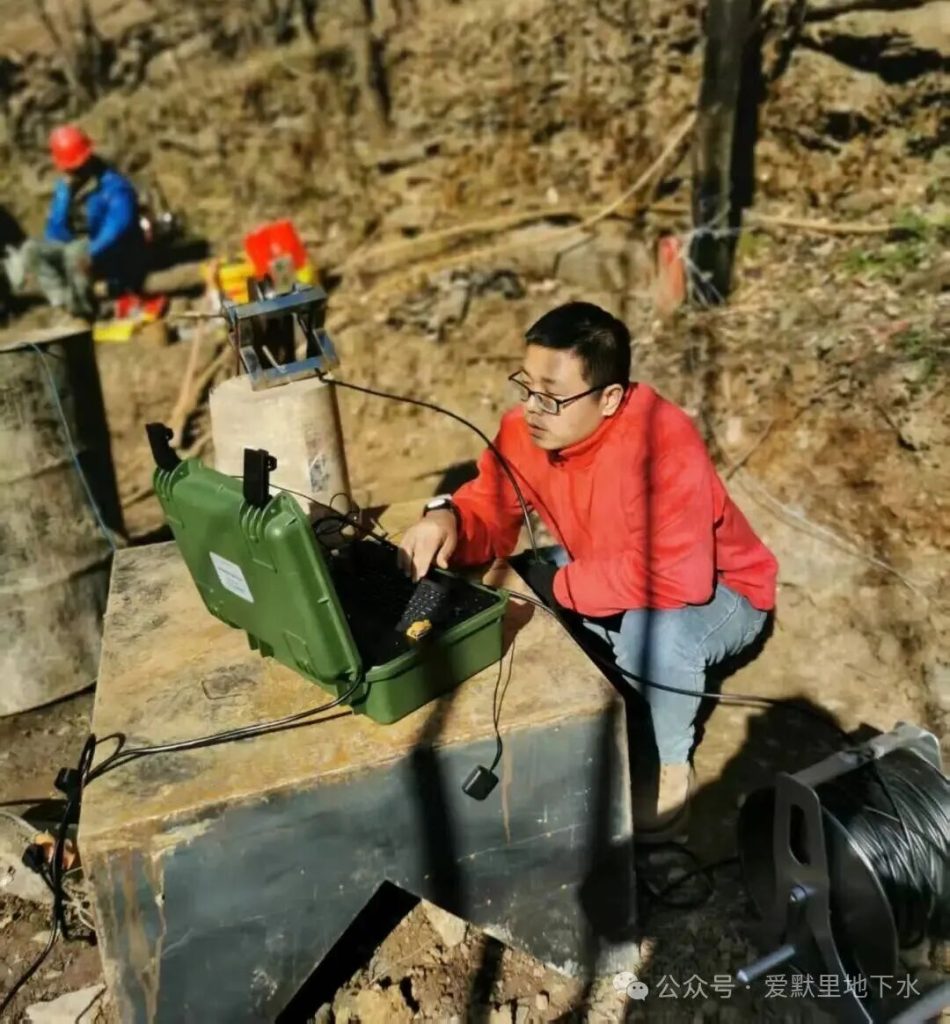
On-site customer challenge: recurring anomalies with no identifiable “problem point”
A third-party testing organization once encountered a typical case.
On-site, they were using a set of imported U.S. digital downhole camera equipment, which had been in service for many years. During routine maintenance of a national monitoring well, persistent issues occurred: after multiple standard well flushing operations, two key water quality indicators remained abnormal. Experts initially suspected that changes in well conditions might be the cause, but the video returned by the equipment was too blurry to assess the actual downhole situation. Due to the lack of clear visual evidence, the issue could not be conclusively determined, and on-site troubleshooting came to a standstill.
After multiple unsuccessful attempts, the client contacted AIMOLI (Hebei) Technology Co., Ltd. for technical support.
After receiving the client’s data, AIMOLI engineers conducted a comprehensive analysis based on:
- basic well condition data.
- blurry downhole images.
- well construction drawings.
Within just one day, the engineers provided a preliminary judgment: the issue was most likely caused by blockage of the well screen slots and sediment accumulation at the bottom of the well.
This conclusion was initially not fully accepted by the client, as wells of the same batch followed identical operational procedures, and only this particular well showed abnormal results.
The real answer required clearer “downhole imagery.”
Field verification with AML921
Subsequently, the client invited the AIMOLI technical team to the national monitoring well site for on-site inspection.
Using the AML921 downhole digital camera system independently developed by AIMOLI (Hebei) Technology Co., Ltd., the downhole conditions were displayed in real time with high clarity:
- The well screen was covered with large amounts of flocculent biological growth and sediment deposits
- The bottom of the well contained residual bailer components, ropes, and other foreign objects
These previously unidentifiable hidden issues were clearly revealed under high-definition imaging and were identified as the direct cause of the abnormal water quality.
After seeing the live footage, all on-site personnel reached a clear consensus on the source of the problem.
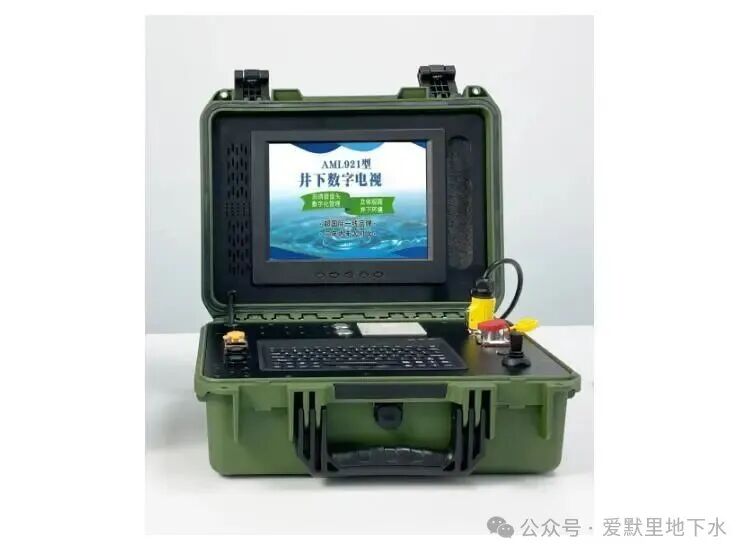
Technical advantages compared with traditional imported equipment
Compared with conventional imported systems, the AML921 has been specifically optimized for downhole visual inspection:
- Dual-probe design combining top-down view and 360° panoramic imaging
- Multi-scenario optimization testing for complex well conditions
- Significantly improved image clarity, enabling identification of fine deposits and structural features
- Simultaneous observation of well walls and well bottom, improving problem localization efficiency
Its core value is not merely “imaging,” but enabling downhole conditions to be analyzed, located, and traced.
Application value: from inspection tool to field decision-making support
The application of AML921 not only solves the problem of poor visibility, but also fundamentally changes field operations:
- Real-time verification of well flushing effectiveness
- Visual identification of internal contamination and structural issues
- Full-process monitoring of cleaning and maintenance work
- Reduced misjudgment and improved reliability of inspection results
Customer feedback was also direct:
“Compared with traditional imported equipment, AML921 is more intuitive and more reliable for on-site decision-making.”
From problem identification to field verification and final solution implementation, AML921 demonstrates not only equipment capability, but also an engineering-level understanding of local well conditions.
In groundwater monitoring, the core is not only “measuring data,” but “seeing what is happening inside the well.”
When downhole conditions are truly revealed, many “problems” are no longer complicated.
