Xinjiang Water Conservancy and Hydropower Engineering Company: Why Did It Finally Choose the AML921 Downhole Camera for a 1,500-Meter Deep-Well Inspection Project?
A water conservancy and hydropower engineering construction company in Xinjiang contacted AIMOLI (Hebei) Technology Co., Ltd. through an online channel to inquire about the AML921 Downhole Camera. The company planned to use the equipment to observe and inspect the inner walls of a completed well.
The project had a demanding requirement for inspection depth, with the equipment needing to reach 1,500 meters. After understanding the customer’s requirements, AIMOLI’s staff prepared a corresponding equipment configuration plan and provided a detailed quotation based on the well depth, well diameter, and actual on-site working conditions.
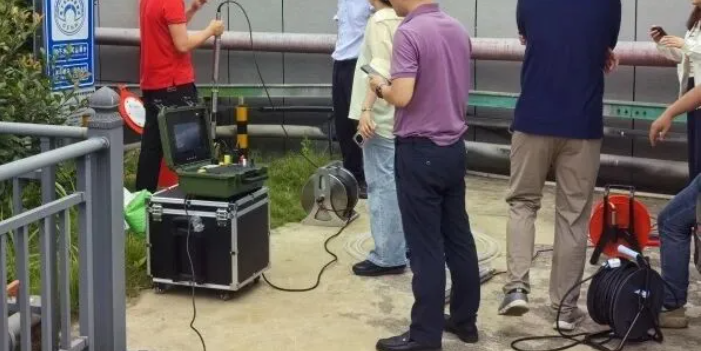
After receiving the quotation, the customer raised questions about the equipment price.
It turned out that the company had previously purchased and used many downhole camera products from other brands. Compared with those products, the quotation for the AML921 was higher than they had originally expected.
From the customer’s perspective, reaching a working depth of 1,500 meters simply meant using a longer transmission cable. Why was there such a significant price difference?
In response to the customer’s questions, AIMOLI’s staff patiently explained the differences based on actual operating conditions.
Deep-well operations are not simply a matter of extending the cable.
As the equipment is lowered deeper into the well, the water pressure inside the well also increases. At the same time, temperatures in deeper geological formations may be higher, placing greater demands on the equipment’s pressure and temperature resistance.
Downhole cameras designed for ordinary shallow wells of 300–500 meters have specific pressure and temperature resistance ratings for their probes, cables, and internal electronic components. Simply extending the cable does not change the original hardware performance of the equipment.
If this type of equipment is used directly in a 1,500-meter-deep well, it may fail to operate properly, experience image signal interruptions, or even suffer damage to its internal electronic components. This makes it difficult to meet the project’s requirements for long-term, stable observation.
To learn more about the equipment, see AIMOLI AML921 Borewell Inspection Camera.
After listening to the explanation, the customer generally understood the technical differences but still wanted to verify the equipment’s performance in a deep-well environment through actual testing.
The customer therefore contacted their previous equipment supplier, requested an extended cable for their existing brand’s downhole camera, and arranged an on-site underwater test.
The on-site test results also allowed the customer to clearly see the differences between the equipment.
During the test, the original equipment could still transmit downhole images to the surface when lowered to approximately 600–700 meters. However, once the depth exceeded 700 meters, the surface controller could no longer receive image signals properly.
The staff then pulled the equipment back to the surface for inspection. They found small cracks in the outer cable sheath. After opening the probe housing for further examination, they also discovered that some of the internal electronic components had been damaged.
It should be noted that these findings represent only the actual performance of this particular unit under the conditions of this test. They do not mean that all equipment from other brands will experience the same problems.
After this on-site test, the customer finally understood an important principle of deep-well equipment selection:
Whether a downhole camera can operate reliably at a specified depth depends on the overall performance of the complete system, not simply on the length of the cable.
Equipment genuinely suitable for deep-well operations requires an integrated design covering probe construction, pressure resistance, temperature resistance, and signal transmission. Only when every component meets the requirements of the actual working conditions can the equipment operate normally in a deep-well environment.
For more information about deep-well inspection applications, read Downhole Camera for Deep-Well Inspection: AML921 Features & Applications.
Based on the previous technical discussions and the results of the on-site test, the customer gained greater confidence in AIMOLI’s product solution. They confirmed the cooperation that same day and officially signed a purchase contract for the AML921 Downhole Camera.
During subsequent after-sales follow-up, the customer also provided positive feedback on the equipment.
The AML921 Downhole Camera delivers clear images and is easy to operate. Staff can quickly learn how to use the equipment and efficiently complete well observation and inspection tasks. Its actual performance met the project’s requirements and effectively reduced on-site working time, saving considerable time and costs for the entire project.
Similar applications can be found in Borehole Inspection Camera: AML921 Improves Underground Well Inspection, which explains how the AML921 supports underground well inspection.
AIMOLI (Hebei) Technology Co., Ltd. has always believed that equipment selection should not be based on price alone. What matters more is whether the equipment is truly suitable for the actual working conditions. This is particularly important for deep-well observation projects reaching 1,500 meters, where equipment stability and reliability directly affect on-site working efficiency. Providing suitable equipment solutions based on customers’ actual needs and helping them solve practical problems are what we truly value.
For additional information about equipment performance and signal transmission, see AIMOLI Downhole Camera: Solving Signal Loss at 200+ Meters.
Frequently Asked Questions (FAQ)
1. What kind of downhole camera should be selected for a 1,500-meter deep-well inspection project?
It is recommended to choose a downhole camera specifically designed for deep-well operating conditions. In addition to meeting the required inspection depth of 1,500 meters, particular attention should be paid to the equipment’s pressure resistance, temperature resistance, and image signal transmission stability to ensure that the complete system can operate in a deep-well environment.
2. Can an ordinary downhole camera be used in a 1,500-meter-deep well simply by extending its cable?
Not necessarily. Extending the cable only increases the distance to which the equipment can be lowered. It does not improve the pressure or temperature resistance of the probe and internal electronic components. Replacing the cable of ordinary shallow-well equipment with a longer one does not mean that the equipment can meet the requirements of a 1,500-meter deep-well operation.
3. What types of inspection projects is the AML921 Downhole Camera suitable for?
The AML921 Downhole Camera can be used for completed well wall observation, internal well structure inspection, and downhole inspection work related to water conservancy and hydropower engineering projects. The specific equipment configuration should be determined according to the well depth, well diameter, and actual working conditions.
4. What parameters should be provided when purchasing a downhole camera?
It is recommended to provide the well depth, well diameter, medium inside the well, expected operating temperature, and specific observation requirements in advance. This information helps the manufacturer determine the appropriate equipment configuration and provide a more suitable downhole camera solution for the project.
