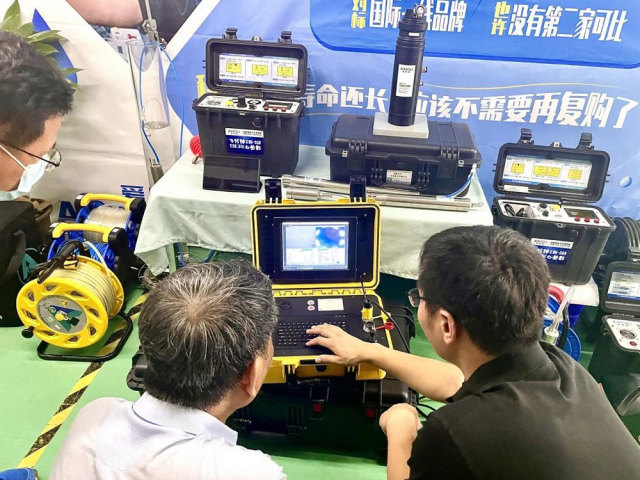
Low flow groundwater sampling originated in 1996; based on research by US EPA experts Puls and Barcelona, the EPA issued a Standard Operating Procedure (SOP) for low-flow sampling (EPA/540/S-95/504). Adhering to these guidelines ensures that collected samples are representative of actual in-situ conditions.
Low flow groundwater sampling and purging involve extracting groundwater at a rate comparable to the surrounding groundwater flow velocity (typically 100–500 mL/min). This minimizes drawdown and reduces the mixing of stagnant water within the well with water entering through the well screen.
Basic Principles of Low-Flow Groundwater Sampling
To obtain representative groundwater samples with minimal disturbance to water quality.
(1) The pumping rate should be ≤0.3 L/min. Groundwater levels must be monitored during purging to ensure drawdown remains <10 cm (the low-flow purging described here refers to the purging performed prior to sampling, not the initial well development purging).
Low-flow purging ensures a steady rate of aquifer recharge and water replacement within the well, preventing rapid pumping or significant drawdown from causing spikes in turbidity.
(2) Water quality parameters must stabilize over three consecutive measurements during purging.
Begin purging at a low flow rate and record the start time. During the process, read and record pH, temperature (T), electrical conductivity, dissolved oxygen (DO), oxidation-reduction potential (ORP), and turbidity every 5 minutes. Purging may conclude once three consecutive readings meet the required stability criteria.
Testing parameters and standards:
pH: Within ±0.1
Temperature: Within ±0.5°C
Conductivity: Within ±3%
ORP: Within ±10 mV
Dissolved Oxygen: Within ±10%; or within ±0.2 mg/L (when DO < 2.0 mg/L) Turbidity: When turbidity is 10–50 NTU: within ±10% When turbidity is <10 NTU: within ±1.0 When turbidity is >50 NTU: within ±5.0
(3) Avoid contact between the water sample and air during extraction.
Both low flow sampling and purging should avoid disturbances such as air stripping or aeration of the water within the well, particularly when sampling for volatile organic compounds (VOCs). Any disturbance to the water can alter dissolved oxygen levels and cause the loss of volatile substances, leading to inaccurate analytical results. Therefore, contact between the water sample and air must be minimized during extraction. (4) Sampling line materials do not affect water quality
When the study focuses on organic compounds in groundwater, the material of the sampler is critical; it must not alter the organic content of the water.
Consequently, these principles undoubtedly impose stricter requirements on well purging and sampling operations, significantly increasing the workload involved in everything from purging to verifying water quality stability. Therefore, a system capable of automating and standardizing groundwater sampling can achieve greater procedural consistency while substantially saving on labor and time.
Advantages of low-flow groundwater sampling:
1 ) Bladder pump continuously discharges water, surpassing imported equipment, with the sampling quality of a bladder pump and the efficiency of a submersible pump.
2 ) The entire sampling process has neither volatile loss nor cross-contamination, which is a quality assurance that is almost not worth mentioning.
3 ) Standard sampling 70 meters, surpasses imported instruments 10 meters, available for 300 meter-deep users, with no malfunctions.